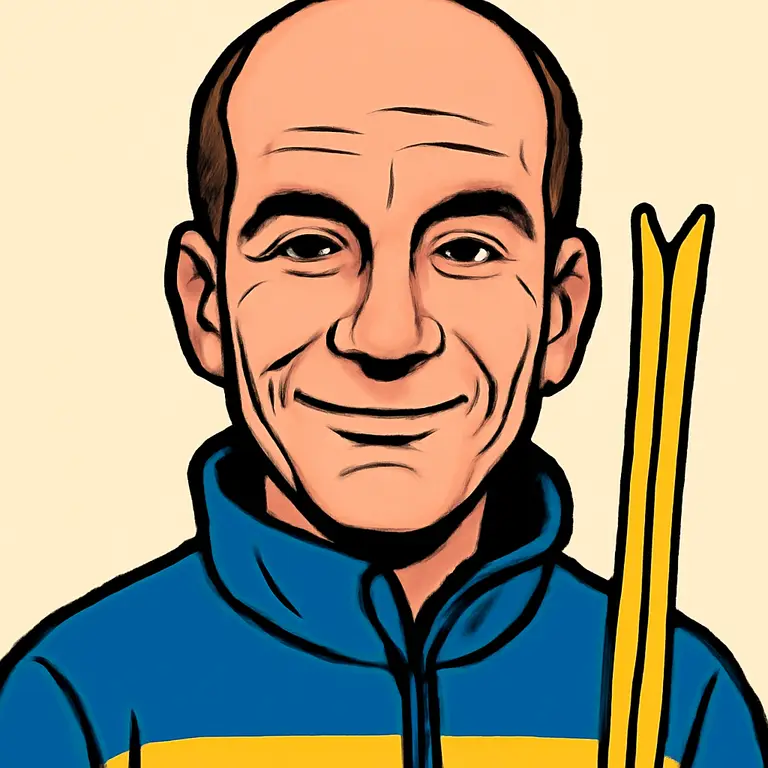
About Stephen Hawking
Between 1979 and 2009, he was the Lucasian Professor of Mathematics at Cambridge, widely viewed as one of the most prestigious academic posts in the world. In 1959, at the age of 17, he began his university education at University College, Oxford, where he received a first-class BA degree in physics. In 1962, he began his graduate work at Trinity Hall, Cambridge, where, in 1966, he obtained his PhD in applied mathematics and theoretical physics, specialising in general relativity and cosmology. In 1963, at age 21, Hawking was diagnosed with an early-onset slow-progressing form of motor neurone disease that gradually, over decades, paralysed him. After the loss of his speech, he communicated through a speech-generating device, initially through use of a handheld switch, and eventually by using a single cheek muscle. Hawking's scientific works included a collaboration with Roger Penrose on gravitational singularity theorems in the framework of general relativity, and the theoretical prediction that black holes emit radiation, often called Hawking radiation. Initially, Hawking radiation was controversial. Hawking was the first to set out a theory of cosmology explained by a union of the general theory of relativity and quantum mechanics. He supported the many-worlds interpretation of quantum mechanics. He also introduced the notion of a micro black hole.
Text from the Wikipedia article Stephen Hawking, licensed under CC BY-SA 4.0. Sentences about life status are left out so the game is not spoiled.